Land Development Project Management Platform
The Challenge
No purpose-built project management software exists for residential land developers, leaving a fragmented market underserved by tools priced and designed for homebuilders.
What I Did
- Conducted stakeholder interviews with land development professionals across company types and sizes
- Developed six detailed personas covering the full organizational hierarchy, from field supervisors to division presidents across public and private firms
- Built a role framework (Lead / Manage / Do) to accommodate title variability across public and private firms
- Produced user story maps across four product domains: Project & Finance, Field, General, and Visibility
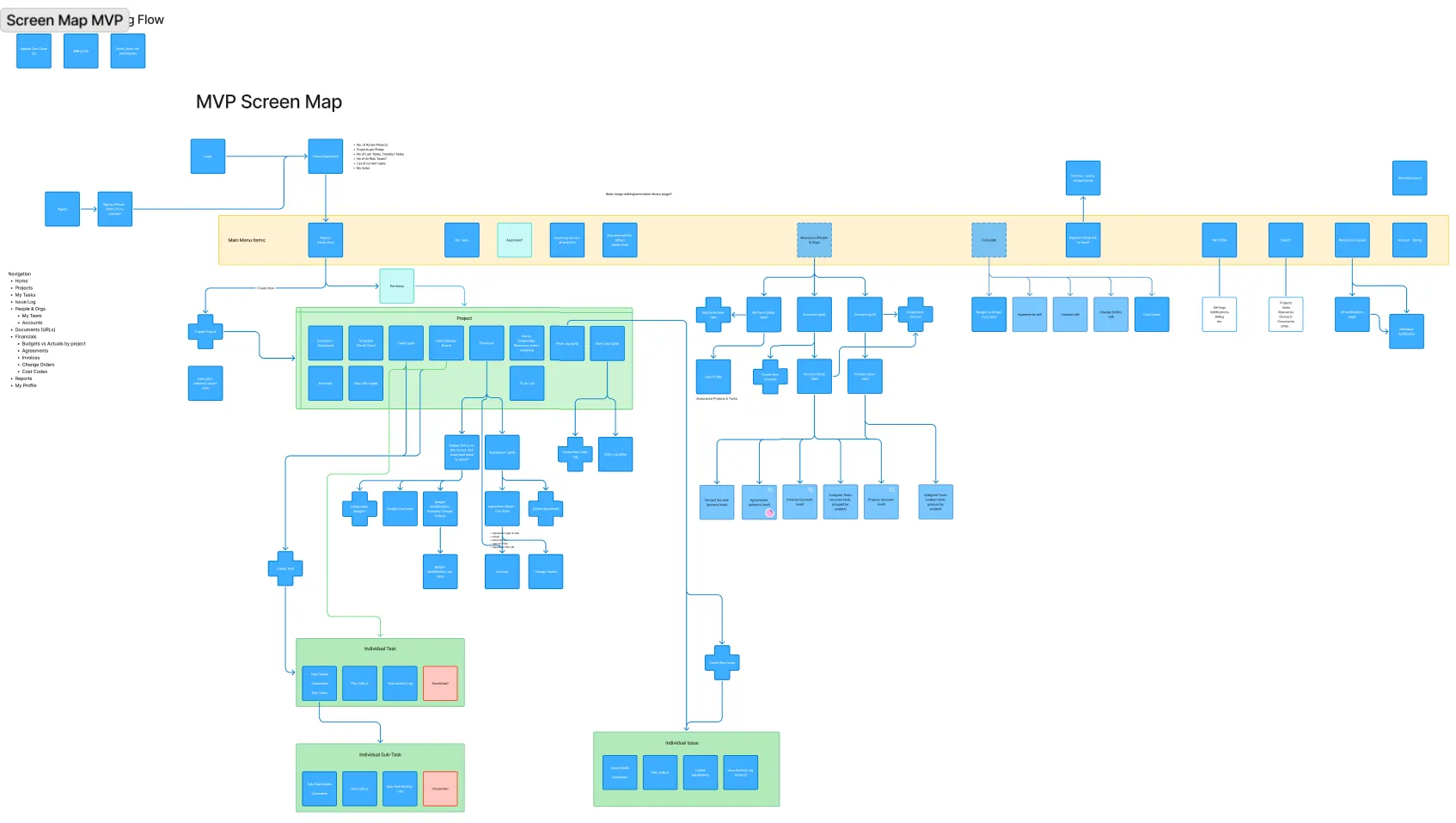
- Created a screen map defining full MVP product scope with annotated hierarchy and functional states
The Result
The discovery phase delivered a research-backed product foundation, including a permission architecture and full story map, ready to hand off directly to design and development.
Focus Areas
- UX Research & Field Observation
- Stakeholder Mapping & User Role Analysis
- User Stories & Test Case Authorship
- User Permission Matrix
- Technical Documentation & UX Writing
- Training Material Development
Tools
- FigJam
- ChatGPT, Perplexity, Claude
- Excel
- ???
- ???
- ???
Project Overview
I supported the implementation of a next-generation airport operations platform at one of the most "well-traveled" airports in the world (a former airport manager told me you don't want to say "busiest," because you don't want to known as the busiest DMV office.)
The engagement ran from February through May 2025, spanning five onsite visits and dozens of stakeholder sessions across the slot management organization and the airport's many stakeholder organizations.
The slot management firm overseeing gate assignments, airline schedules, and day-of terminal operations needed to replace its legacy operations platform with a modern, cloud-native suite covering flight scheduling, gate and resource management, and real-time data across every terminal. They had been using a clunky legacy system that had shaped how its team thought about their own workflows for years. Baggage allocation was handled in Excel. Processes the new platform could automate had become deeply embedded manual habits. The airport scheduling coordinator had created 70+ rules in the system as workarounds. Adopting the new platform meant rethinking processes that had been shaped by the limitations of the old system for years.
The implementation was part of a broader airport modernization initiative, and the timeline was tight. Getting it right required more than technical configuration. It required someone embedded in the operation, talking to the people who would actually use the software every day.
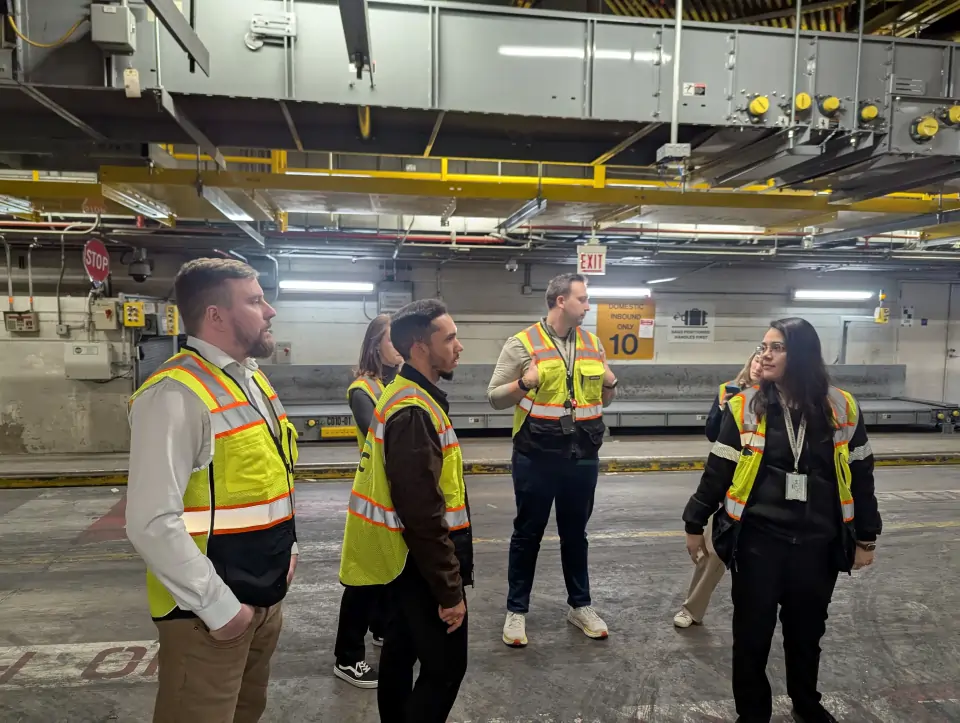
My role was to bridge that gap. Working alongside an aviation consulting team and the software vendor, I spent five months embedded in the operation, shadowing staff, interviewing stakeholders across more than a dozen roles, mapping user permissions, and building the documentation and training materials that would need to work the first time, in a live operational environment.
The Work
The research started before getting onsite. I used ChatGPT and Gemini to research and document how airport slot management works and to create a glossary of common terms and acronyms in the industry. I pulled job post descriptions from the slot management firm's website and from existing employee's LinkedIn profiles to create initial user personas and get an understanding of what they do.
Once onsite at the airport, I shadowed the scheduling team, went up in the tower to observe day-of operations and the issues they faced, and met with the Ancillary Space Coordinator, Facilities Manager, Compliance Analyst, and Operations leadership. Each role had a distinct relationship with the data and a different tolerance for the gap between what the system said and what was happening in reality.
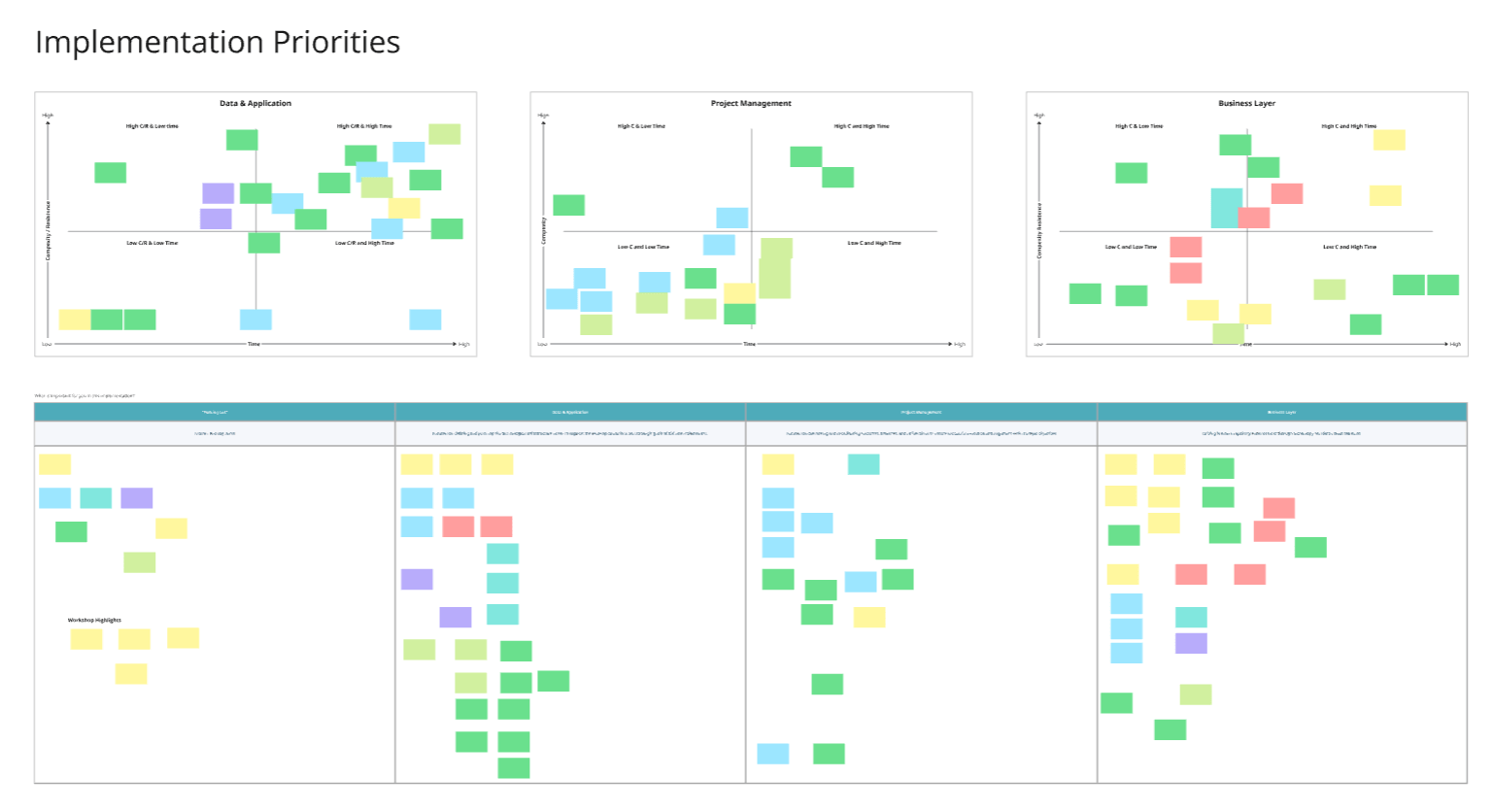
From that research and several workshops, I built stakeholder maps and user role definitions covering the slot management firm's employees and multiple airport authority groups. That segmentation fed directly into the user permission matrices I developed for both platforms, working with the client to decide how many distinct roles the airport needed and exactly what each one could see and do. It's one of those deliverables that looks like a spreadsheet but is really the output of weeks of research.
My contributions included:
Stakeholder mapping and user role analysis across the slot management firm and airport departments
User permission matrix development for both the AODB and RMS
User story and test case authorship organized by job title
- Field observation across scheduling, tower operations, and ancillary space management
- Compliance and reporting documentation
- User manuals, quick-start guides, and training materials for both platforms